
Ram Mandir, Ayodhya—Significance and Overview

The Ram Mandir in Ayodhya, Uttar Pradesh, is a Hindu temple dedicated to Lord Ram. The temple's construction is an event of profound religious, cultural, and historical significance in India.


Overview and Significance

Background: The site in Ayodhya is traditionally believed to be the birthplace of Lord Ram (Ram Janmabhoomi). For many years, the location was a point of intense contention as it was also the site of the Babri Masjid, a mosque built in the 16th century, which was demolished in 1992.
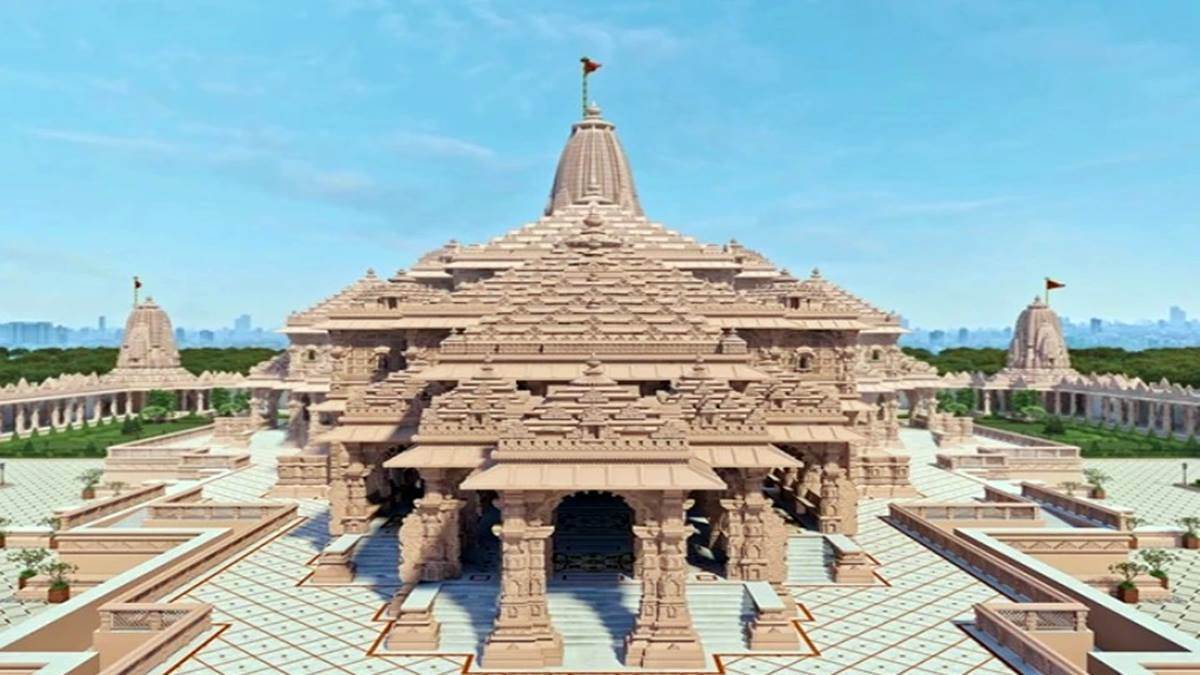
Source: https://img.naidunia.com/naidunia/ndnimg/02012024/02_01_2024-ayodhya_ram_mandir_indore_2-1-2024.jpg

  1. Supreme Court Verdict (2019): In November 2019, the Supreme Court of India delivered a historic verdict, granting the disputed land for the construction of the Ram Mandir. The court also directed the government to allocate an alternative plot of land to the Muslim community for the construction of a new mosque.

Bhoomi Pujan (Groundbreaking Ceremony): The foundation stone-laying ceremony, known as the Bhoomi Pujan, took place on August 5, 2020. The event was attended by Prime Minister Narendra Modi and various religious and political dignitaries, marking the official commencement of the temple’s construction.

Architectural Plans: The temple is designed to be grand, meticulously showcasing the ancient Indian Nagara style of temple architecture. It is planned as a multi-story structure featuring intricate carvings, sculptures, and dedicated halls (mandaps)

Current Status: The construction of the Ram Mandir is an ongoing, multi-phase process. While the Bhoomi Pujan was held in 2020, the full project is expected to continue over several years. The temple holds immense importance for millions of Hindus worldwide and stands as a significant symbol of cultural and religious resolution.

The Ram Mandir symbolizes the resolution of a long-standing dispute and holds immense importance for millions of Hindus who consider Ayodhya to be the sacred birthplace of Lord Ram.

Popular posts from this blog

Amarkantak - A Worship Place of Madhya Pradesh

A majestic place of Madhya Pradesh is our next tourist destination. Amarkantak is the small city situated in the middle area of superb ranges Satpura and Vindhya. The average elevation of this city is 1065 meters. The charming weather and best valleys with amazing view makes this place first choice for nature lovers. Amarkantak wraps up the splendor of typical sylvan atmosphere. The 2 best rivers of India known as Narmada and Sone are flowing from this area.  Word Amarkantak comes from Sanskrit language that is related to mythological meaning. Because of religious values this place is also known as Theertha Raja (King of Holy destinations). The Narmada River is having holy values for Indians.  It’s a land of great history holding story of diverse empires. Pandavas also ruled this place for short period.  Amarkantak is added in the list of usual heritage zone. It’s full of dense forest with huge valleys.  When we talk about the spots for travele...

Somasila Dam: A Hidden Gem in Nellore District

This is a fantastic breakdown of one of Andhra Pradesh’s most underrated gems. Somasila isn't just a wall of concrete; it’s where engineering shakes hands with the soul of the Eastern Ghats. I’ve rewritten your content into a high-energy, "travel-mag" style that highlights the drama of the landscape and the peace of the reservoir. Somasila Dam: Where the Penna River Meets the Heavens 🌊⛰️ Forget the crowded tourist traps. If you’re looking for a destination that balances massive scale with pin-drop silence, Somasila Dam in Nellore is your next coordinates. It’s not just the largest reservoir in the Penna River basin—it’s a 212-square-kilometer mirror reflecting the majesty of the Eastern Ghats. The Vibe: Engineering Marries Nature The "Can't-Miss" Experiences The Spiritual Shift: Visit the Sri Someswara Temple . It was heroically relocated to higher ground to save it from the rising reservoir waters. Today, it stands as a sentinel of peace and a must-v...

Jaisalmer

Jaisalmer is nicknamed as "The Golden City." It is the small town of Rajasthan, India. Jaisalmer is situated at good distant of 575 kilometres from Jaipur the capital of state. This amazing place stands on the edge of yellowish granite, garlanded by a castle, which includes the fort and some elaborated Jain temples. The houses and temples at this small town are finely sculptured. The world known desert Thar is the heart of this town. The population of Jaisalmer is around 78,000 and also managerial headquarter of Jaisalmer. History of this town itself is special. The origin  name of Jaisalmer is after its originator Raja Jaisal. He  was the king of Rajput. Because of yellow sand and desert area this place is also named as "Golden City of India." The mainstream of the population of this gold city is Bhati Rajputs. This population is belonged to the warrior community of India. Many rulers ruled on Jaisalmer, which gave the special spot to this place in Indi...